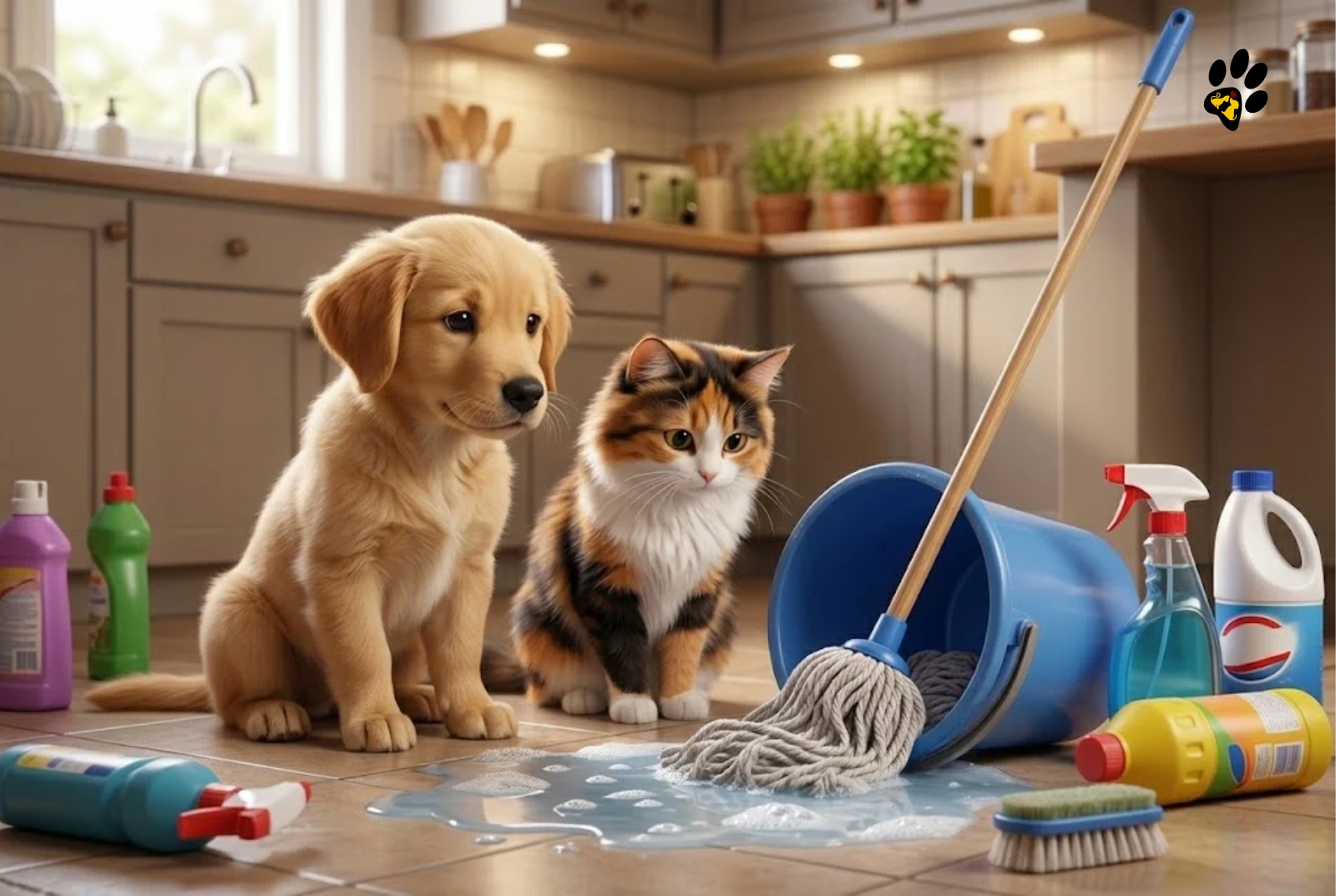
Indoor Safety Part 4: Everyday Household Chemicals
Listen to this article:
Our homes are filled with products designed to make cleaning easier, floors sparkle, and cars run smoothly. However, many of these everyday chemical staples pose hidden, serious risks to both dogs and cats.
Because our pets walk barefoot across our floors, lie against surfaces, and explore with their noses and mouths, what we use to clean and maintain our homes directly impacts their safety.
Floor Cleaners & Disinfectants
The Paw-Licking Route
When you mop your floors with strong chemical disinfectants or multi-purpose cleaners, the chemical residue stays on the surface. Pets walk across the floor, and later lick their paws during grooming.
Harsh chemicals, bleaches, and concentrated phenol-based cleaners can cause chemical burns on their paw pads and severe irritation or ulceration in their digestive tracts if ingested. Always ensure floors are completely dry before letting pets back in, or switch to pet-safe, vinegar-based cleaning solutions.
Laundry & Dishwasher Pods
Concentrated Danger
Modern laundry and dishwasher detergent pods are bright, squishy, and often left in low cupboards or on counters. Dogs (and curious cats) can easily puncture them while playing.
The highly concentrated detergent inside is severely caustic. Puncturing a pod can cause chemical burns to a pet's mouth, esophagus, and eyes, and if inhaled into the lungs, it can cause life-threatening respiratory distress.
Garage Hazards: Antifreeze
A Deadly Sweet Trap
If you keep automotive supplies in your garage or carport, antifreeze (ethylene glycol) is one of the most dangerous substances known to pets. It has a sweet taste that dogs and cats find irresistible.
Just a tiny amount can cause rapid, irreversible kidney failure. Always clean up spills immediately, store containers on high shelves, and look into pet-safe propylene glycol alternatives.
The Kahu Philosophy: Cupboard Security
Pet-proofing your indoor spaces is just as important as securing your garden. Simple habits—like installing child-locks on low chemical cabinets, wiping down floors after heavy cleaning, and keeping garage chemicals sealed high up—ensure our furry family members stay safe and sound in our homes.