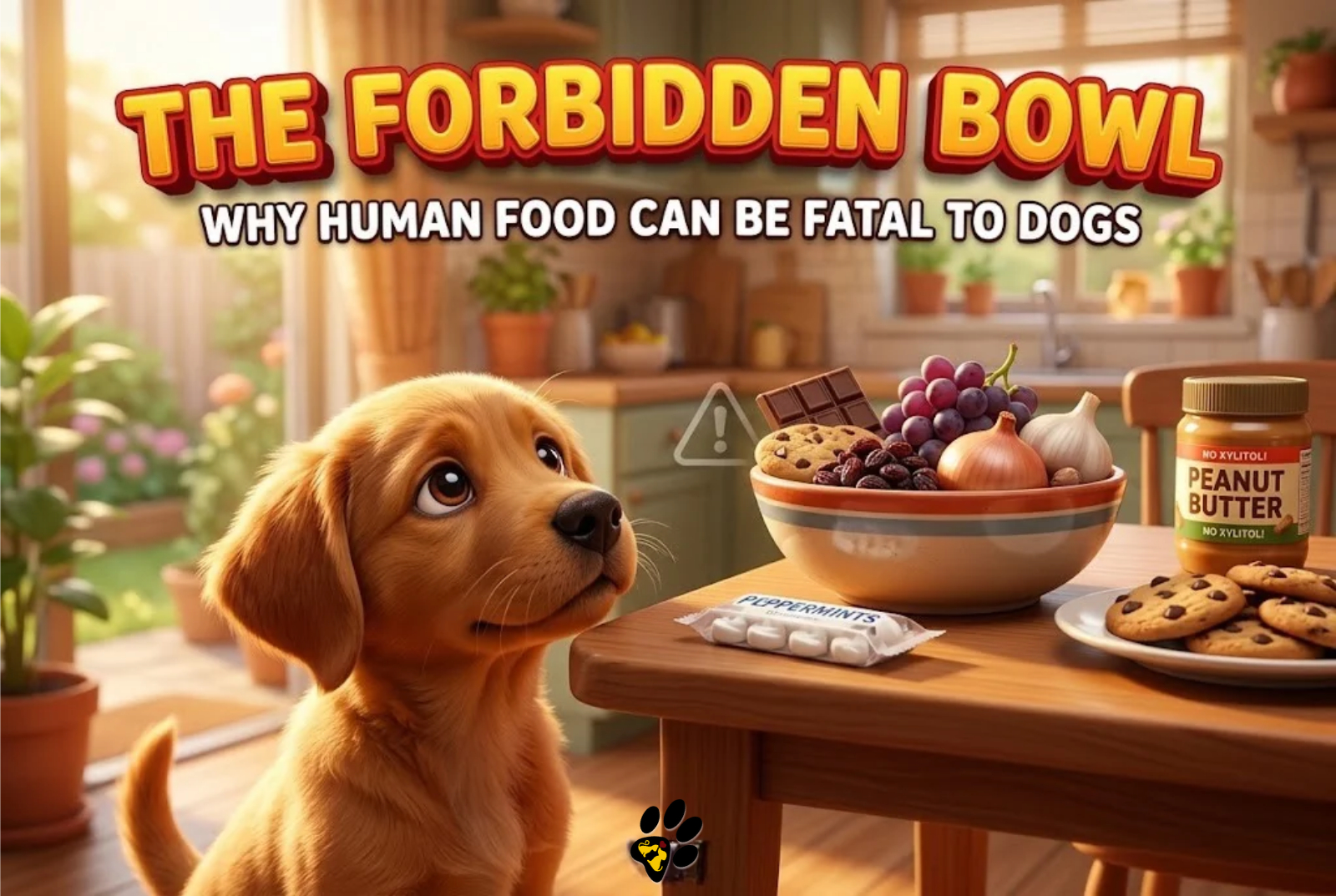
The Forbidden Bowl: Why Human Food Can Be Fatal to Dogs
Listen to this article:
It is incredibly hard to resist those big, soulful eyes staring up at you from beneath the dinner table. When we love our dogs, our natural instinct is to share what we have with them. Food is love, after all.
However, a dog's biological makeup is fundamentally different from ours. What acts as a healthy snack or a harmless treat for a human can act as a devastating biological toxin to a canine system. True animal guardianship (what we at Happy Puppy call being a Kahu) means knowing exactly where to draw the line. Here is a breakdown of the most dangerous human foods for dogs, and exactly why their bodies cannot handle them.
1. Chocolate and Cocoa Products
We all know chocolate is bad for dogs, but many don't know why. Chocolate contains a compound called theobromine, alongside caffeine. Humans easily metabolize theobromine, but a dog's system processes it incredibly slowly, allowing it to build up to toxic levels. This overstimulates their central nervous system and cardiovascular system, leading to heavy panting, severe muscle tremors, seizures, and fatal heart failure. Dark chocolate and baking cocoa are the most concentrated and therefore the most lethal.
2. Grapes, Raisins, and Sultanas
This is one of the most unpredictable toxins in the veterinary world. The exact toxic substance inside grapes and raisins remains unknown, but its effect is devastating. Ingesting even a single grape or raisin can trigger sudden, irreversible acute kidney failure in some dogs. Because the toxicity threshold varies so wildly from dog to dog, there is no "safe" amount.
3. Xylitol (Birch Sugar / Artificial Sweetener)
Found heavily in sugar-free gum, breath mints (like white peppermints), diet baked goods, and many brands of peanut butter, Xylitol is a silent killer. When a dog consumes Xylitol, their pancreas confuses it with real sugar and releases a massive surge of insulin. This causes their actual blood sugar to plummet to life-threatening levels (hypoglycemia) within minutes, rapidly followed by acute liver failure. Always check your peanut butter jar's ingredient list before stuffing a chew toy, and ensure your handbag is zipped completely shut so they cannot dig out your mints.
4. Onions, Garlic, and Chives (The Allium Family)
Whether powdered, raw, or cooked, the Allium family contains compounds that cause oxidative damage to a dog's red blood cells. Over a few days, these cells become brittle and rupture, leading to a condition called hemolytic anemia. The dog's organs are slowly starved of oxygen, resulting in pale gums, extreme lethargy, and a racing heart rate. Keep onions and garlic powder far away from the dog bowl.
5. Cooked Bones
At Happy Puppy, we advocate for the biological benefits of feeding specific raw bones under strict supervision. However, cooked bones are universally lethal. The cooking process draws the moisture out of the bone, changing its biological structure into brittle, glass-like shards. When chewed, these shards splinter and can easily puncture the esophagus, stomach, or intestinal tract, causing fatal internal bleeding and sepsis.
6. Macadamia Nuts
While many nuts are simply too high in fat for dogs (risking pancreatitis), Macadamia nuts contain a specific, unknown toxin that directly attacks the canine nervous system. Ingestion leads to severe weakness, primarily in the back legs, along with vomiting, muscle tremors, and hyperthermia (a dangerous spike in body temperature).
7. Human Cookies & High-Sugar Foods
It is a common habit to toss a dog a piece of a biscuit with your morning coffee, but human cookies are packed with concentrated sugar, butter, and refined flours. A dog's digestive tract is not built to process high volumes of glucose. Feeding sugary human treats disrupts their gut microbiome, causes severe stomach inflammation, and rots their teeth. Over time, this leads to obesity, canine diabetes, and highly painful bouts of pancreatitis (inflammation of the pancreas). If you want to spoil them during tea time, stick to a crunchy raw carrot or a vet-approved dog biscuit instead.
Emergency Protocol: What to Do
If you suspect your dog has eaten any of these items, time is your most critical asset. Do not wait for symptoms to appear—by the time a dog looks sick from grapes or Xylitol, their internal organs are already failing.
Grab the packaging or the remaining food so your vet knows the exact toxin and concentration, and transport your pet to your primary veterinarian or the nearest 24-hour emergency hospital immediately. When in doubt, a quick phone call to the vet can be the difference between life and death.